Questão de Inglês — Interpretação de Textos (Understanding) — CESPE / CEBRASPE 2023
- Código
- ce396019
- Banca
- CESPE / CEBRASPE
- Órgão
- UnB
- Ano
- 2023
- Cargo
- Vest ( )
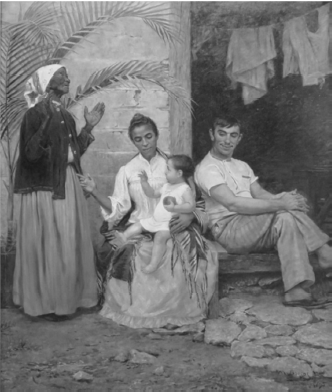
In 1895, the Galician-born Brazilian painter Modesto Brocos (1852-1936) presented his painting titled “A Redenção de Cam” (The Redemption of Ham). The painting represents the view, very dissiminated at the time, that the blackness of the Africans remains immutable and could only be changed by miscegenation. It represents the dilution of Blackness, the whitening of the Black population in Brazil. The painting conveys the disappearance of Blackness through the mixing of “races”.
The title of the painting is a reference to the biblical Ham, Noah’s cursed son who is considered the father of people of African descent. Proponents of New World slavery used the story of his wrongdoings to justify slavery. The title of the painting, then, posits that the elimination of the stain of Blackness is the path of redemption for Black people and the hope for a future white nation.
The fact that the work earned Modesto Brocos a gold medal at the National Salon of Fine Arts in 1895 shows the direction of Brazilian art in the late 19th century and the race ideology predominating in the country at the time.
Internet: <blackwash.blog> (adapted)
- CCerto
- EErrado