Questão de Inglês — Verbos (Verbs) — VUNESP 2025
- Código
- vu217225
- Banca
- VUNESP
- Órgão
- UNESP
- Ano
- 2025
- Cargo
- V - - Doc ( )
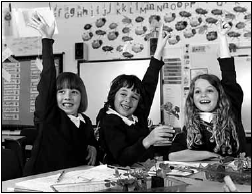
Education shouldn’t be a passive experience, with children simply absorbing the knowledge teachers pass on to them. Research has shown that when children have an input into their learning, they feel more motivated, engaged in learning and happier in school. But when, as part of our study, we asked children about their opportunities to make choices in their education, they were often hopeless. “I’m a child and I can’t do anything,” one elementary student said.
Our 40-month study involved in-depth research across three contrasting primary schools in England: an1 independent (fee-paying) school, a 2community state school and an 3academy state school. We set out to understand how much agency children have in their education, and what difference it makes when they do.
Children across all three schools consistently expressed a desire for more choice in their education. When asked about the opportunities for it, one child at the 1independent school stated: “We don’t really get to choose what we do in the lessons.” This sentiment was echoed in the community state school.
Most revealing was the contrasting experience in the academy school, which had developed a distinctive approach to curriculum design involving direct pupil input. Here, children reported significantly higher levels of engagement. “I really enjoy school, and I really enjoy being able to pick what we do,” one child told us.
The data collected highlight a crucial point: children don’t expect complete freedom, but they do want meaningful opportunities to influence their experience of school. And the findings were clear: when children have meaningful input into their learning, their motivation soars.
Our research led to the development of what we call “structured freedom” – a balanced approach that maintains educational standards and necessary educational structures while creating space for children’s agency. This isn’t about letting children do whatever they want. Instead, it’s about giving children opportunities for meaningful choice within clear frameworks and providing the opportunity to place children’s agency at the heart of educational discourse and practice.
(Yana Manyukhina e Dominic Wyse. www.theconversation.com, 02.06.2025. Adaptado)
1 Independent school: a private school that does not receive money from the government.
2 community state school: a type of state-funded school, run by a local authority.
3 academy state school: a type of state-funded school run by an academy trust. They have more control over how they do things than community schools.
- AWe don’t really get to choose what we do in the lessons at school.
- BMy grandparents are greatly limited, but feel so happy when there’s a favor they can do!
- CI don’t know what’s happened to me; everything that I do turns out badly.
- DWe’re not always able to prevent the damage floods and storms can do.
- EThe two boys like to play dirty jokes: this is what they do when people are not looking.