Questão de Inglês — Interpretação de Textos (Understanding) — VUNESP 2025
- Código
- vu217287
- Banca
- VUNESP
- Órgão
- FEMA
- Ano
- 2025
- Cargo
- Vest ( )
Leia o texto a seguir para responder a questão
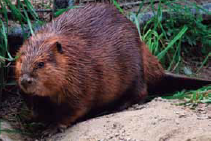
(www.uticazoo.org)
Hundreds of animals, from tiny ants to mighty hippos, are shaping the Earth’s surface as powerfully as floods and storms. These animals effectively act as landscape engineers, reorganising soils and sediments.
Animals act as landscape architects as they feed, create shelter, reproduce and simply move around. Beavers build dams that form wetlands and change river channels. Spawning salmon1 move huge amounts of river sediments too, similar to the amounts moved by floods. Yet, beyond such two charismatic and iconic examples, animal landscape engineers can be viewed as curiosities — interesting but uncommon, with much to be still learned about their role in landscape change.
Animal architects include some of the smallest creatures on Earth, such as ants and aquatic insect larvae, as well as the largest, such as elephants, hippos and bison. As a group, they are globally widespread across land and in water, in all major ecosystem types.
My research team searched thousands of published articles for mentions of animal engineers to compile a comprehensive list of species. But we inevitably missed some studied species in our searches. For instance, we know that the tropics and subtropics are biodiversity hotspots, but fewer animal agents of landscape change were reported there. This is because research and resources have been concentrated in places like Europe, the United States and Australia. Countless more species remain unreported or even undiscovered, especially smaller, less visible animals such as insects.
Finding ways to control the enormous energy potential of landscape-shaping animals could help simultaneously mitigate and adapt to climate change and increase biodiversity.
(Gemma Harvey. https://theconversation.com, 25.03.2025. Adaptado.)
1 spawning salmon: salmão em época de desova.
- Aé um grande caçador de coelhos, cobras e, inclusive, pássaros.
- Bconstrói tocas que são utilizadas também por outros animais.
- Cé o principal animal semiaquático que atua como arquiteto do meio-ambiente.
- Dpode atingir o comprimento de aproximadamente 6 metros.
- Eusa as cavernas que constrói como abrigo contra animais predadores.