Questão de Inglês — Interpretação de Textos (Understanding) — VUNESP 2021
- Código
- vu146681
- Banca
- VUNESP
- Órgão
- FICSAE
- Ano
- 2021
- Cargo
- Vest ( )
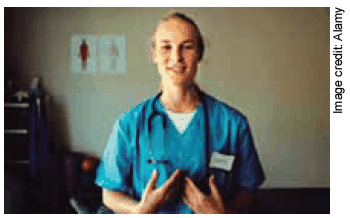
The most popular surname in Germany is Müller, while in Ukraine, it’s Melnik; both are words for a miller. And in Australia or Canada, it’s Smith – as in silversmith and gunsmith1. These names date back as far as the Middle Ages, when a person’s job was such a defining characteristic, it became their literal identity.
Today, our jobs don’t dictate our names – but they still often become a major part of our identities. After all, one of the first questions we tend to exchange with a person we have just met is, “What do you do?”. It can be a clue into their values, interests or background (or simply help two strangers pass time at a cocktail party!).
Historically, most people didn’t get to choose their jobs, says Anne Wilson, a professor of psychology at Wilfrid Laurier University in Ontario. “It was usually generational – your father was a carpenter, so you were a carpenter,” she says. “Or, you’d just take a job based on the opportunities available.” But increased access to education over the past century has led to the emergence of more varied jobs, and thus higher income. So, jobs have become a significant marker of identity in a more nuanced way. When someone says they’re a surgeon, you generally assume they have strong education and high income – two metrics that can determine one’s standing in society, and affect how you subsequently judge the person or how the person sees themselves.
(Kate Morgan. www.bbc.com, 13.04.2021. Adaptado.)
1 miller, silversmith and gunsmith: manual work jobs, very frequent in the past.
- Apeople could not choose the jobs they believed they had a talent for.
- Byounger generations would often follow their parents’ occupations.
- Cpoor people had no access to education.
- Dprofessionals were regularly judged on their job choices.
- Ehealth care professionals tended to have the highest salaries.